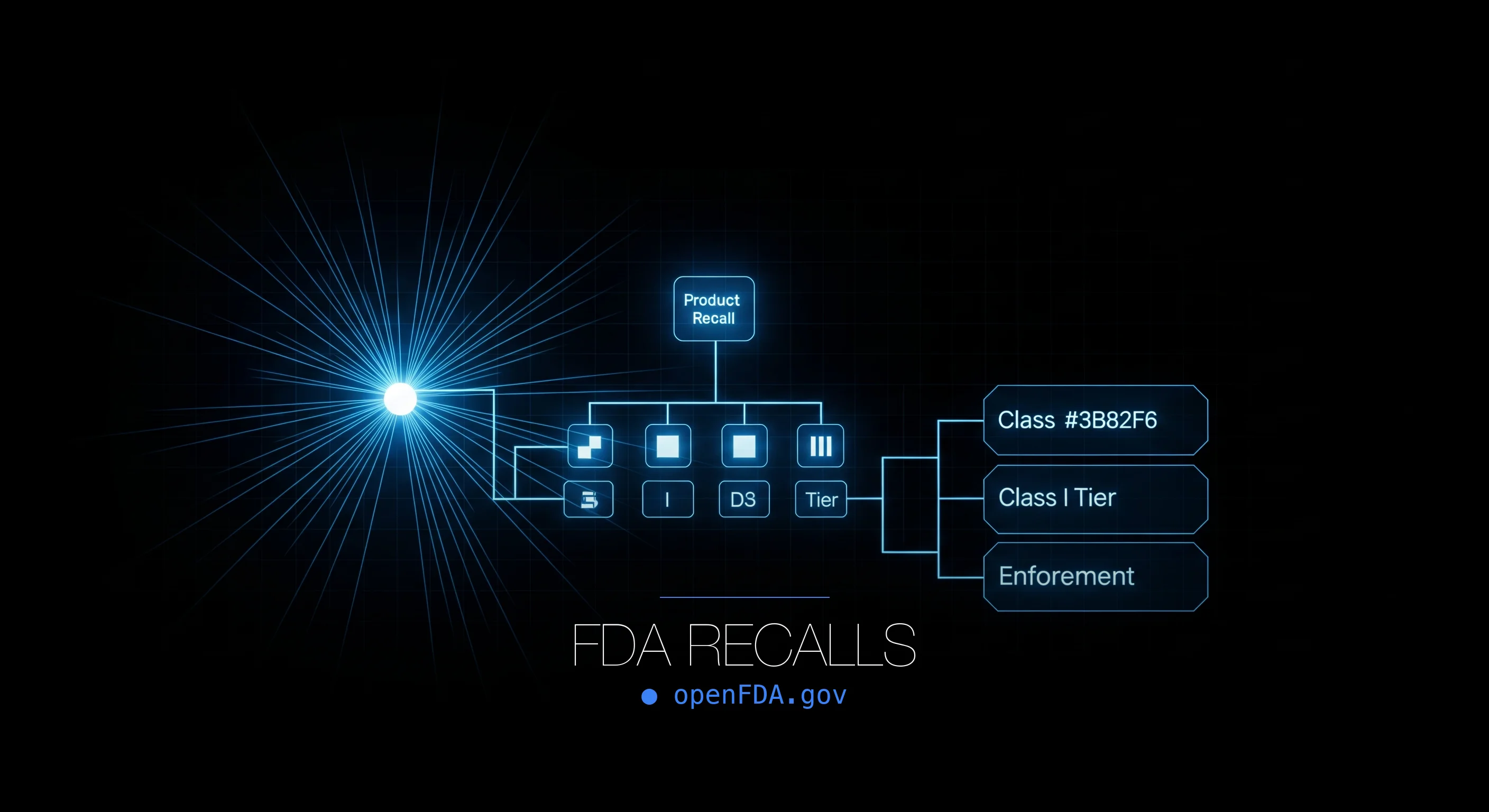
Automate FDA Recall Monitoring for Drugs, Devices and Food
Build an automated FDA recall watch with the openFDA enforcement data: drug, device and food recalls as structured JSON, filtered by classification
The actor referenced in this article. Pay only for results delivered.
When the FDA pulls a product, the companies that find out first move first, whether they’re a retailer clearing shelves, a manufacturer checking a supplier, or a compliance team logging the event. This guide shows how to turn FDA recall data into an automated watch.
Try it live: FDA Recalls Scraper, Drug, Device & Food, 23 Fields. Pay only for results delivered, no result no charge.
TL;DR: Use the FDA Recalls Scraper to pull drug, device and food enforcement reports filtered by product, classification, recalling firm, state and date. Schedule it daily to catch new recalls the moment they post. No API key, zero charge on empty searches.
What’s in FDA enforcement data
The FDA publishes every recall and enforcement action through the open FDA enforcement datasets: one each for drugs, devices and food. Every record includes the recall number, classification (Class I is most serious), status, recalling firm, product description, the reason for recall, distribution pattern, and dates. That’s enough to power real monitoring:
- A class-I recall watch for the products or categories you handle.
- A supplier monitor that flags whenever a firm you buy from is named in a recall.
- A compliance log that captures every recall in your space automatically.
Watch the most serious recalls
Class I recalls are the ones that demand same-day action. Pull the latest across a category:
{
  "productType": "food",
  "classification": "Class I",
  "status": "Ongoing",
  "dateFrom": "2026-01-01",
  "maxResults": 200
}
Schedule this daily and you have a feed of every ongoing class-I food recall, the kind of thing a grocery or distributor needs to act on within hours.
Monitor a specific supplier
If a recalling firm in your supply chain is named, you want to know before your customers do:
{
  "productType": "drug",
  "recallingFirm": "Glenmark",
  "maxResults": 100
}
Each record returns the product description, reason for recall, distribution pattern and dates, enough to assess exposure immediately.
Wire it into an alert
Run the actor on a schedule, diff the new recall_number values against what you’ve already seen, and push anything new to Slack or email. Because the actor charges zero on empty runs, a daily watch that usually finds nothing costs nothing on the days there’s nothing to find.
Pricing and reliability
The FDA Recalls Scraper is pay-per-result: $0.0035 per recall. Empty searches are never charged. No API key required: openFDA is fully open, and the same clean schema covers drugs, devices and food.
FAQ
Do I need an API key? No. openFDA is fully open.
Which product types are covered? Drugs, medical devices and food, each with the same consistent record schema.
What do the classifications mean? Class I = reasonable probability of serious harm or death; Class II = temporary or reversible harm; Class III = unlikely to cause harm. Filter by any of them.
How current is the data? It reflects the FDA’s published enforcement reports, updated as the agency posts them.
Can I automate a daily watch? Yes: save your filter as a task, schedule it, and diff new recall numbers to drive alerts.
Explore the scraper referenced in this article: inputs, outputs, and pricing, then run it on Apify.
Bundesanzeiger Scraper: German Company Filings Without a Data Subscription
Pull German company filings from the Bundesanzeiger by name: annual accounts, insolvency proceedings, ad hoc disclosures and voting rights notices. No login, no API key.
Find Any US Importer's Overseas Suppliers From Customs Records
US customs bill of lading records name who ships to whom. How to pull an importer's overseas suppliers, shipment volumes and HTS codes without a trade data subscription.
Amazon Retail Price vs AliExpress Supplier Cost: The Sourcing Check in One Call
Before you sell a product, you want to know what it costs to source. Here is how to pull an Amazon listing's retail price and reviews against real AliExpress supplier prices in a single call, and what the spread actually tells you.