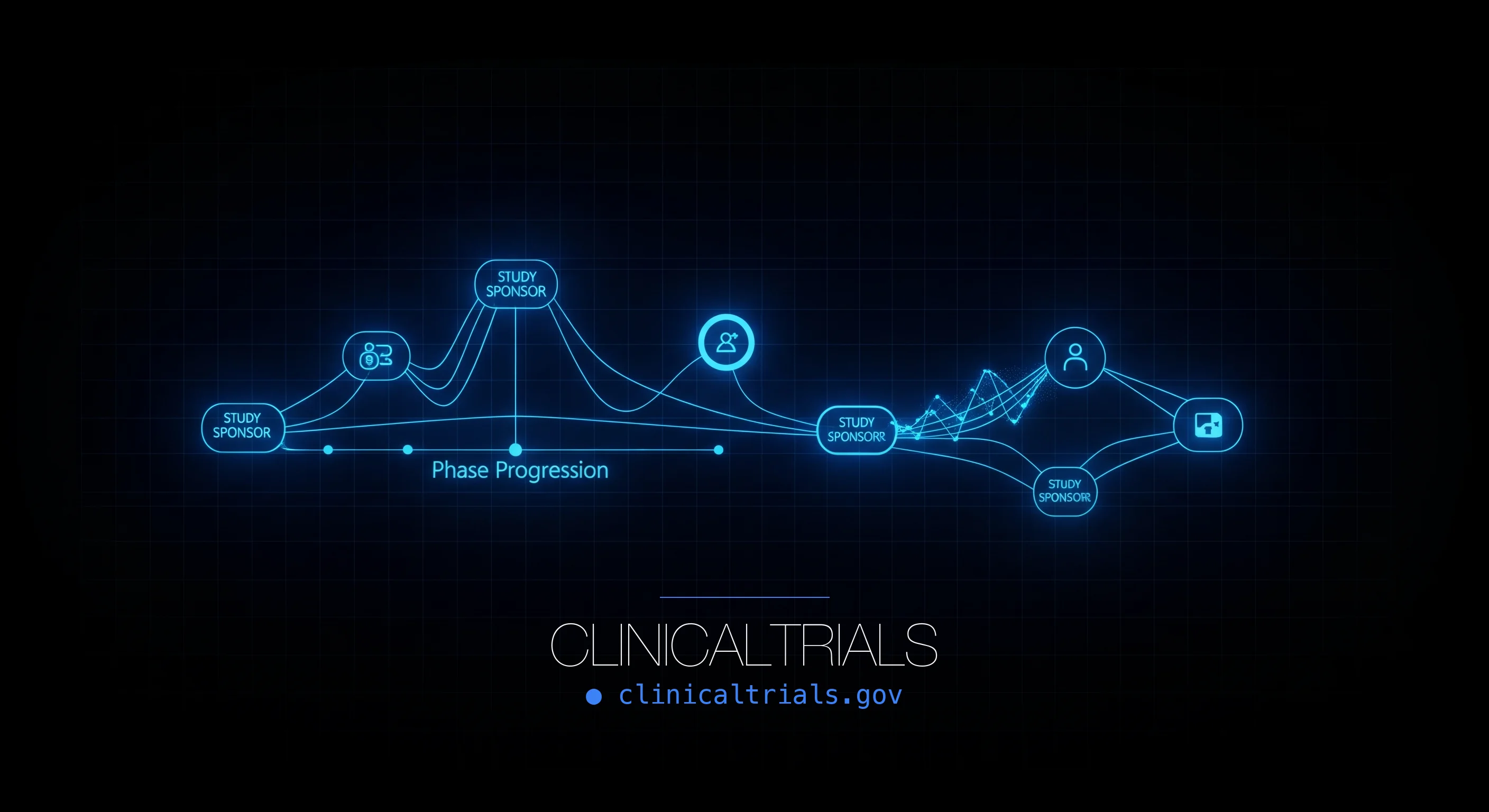
Build a Clinical Trial Pipeline Tracker with the ClinicalTrials.gov Scraper
Track any drug, sponsor or indication across ClinicalTrials.gov as structured JSON: phases, sponsors, enrollment and sites
The actor referenced in this article. Pay only for results delivered.
ClinicalTrials.gov is the global registry of clinical studies: over 480,000 trials, every sponsor, drug, phase and site. For pharma and biotech teams it is the canonical source for pipeline intelligence, but its API v2 returns deeply nested “protocol section” trees that are painful to work with. This guide turns it into a flat, trackable feed.
Try it live: ClinicalTrials.gov Scraper, 26 Fields, Sites, No API Key. Pay only for results delivered, no result no charge.
TL;DR: Use the ClinicalTrials.gov Scraper to pull studies filtered by condition, drug, sponsor, status and location, flattened to one clean record per trial with phase, enrollment, sponsor and sites. Track a competitor’s pipeline, monitor an indication, or build a recruitment list. No API key, zero charge on empty runs.
Why a flat feed changes everything
The raw API nests every field inside modules: identification, status, sponsor/collaborators, design, arms/interventions, contacts/locations, eligibility. To build a simple “what trials is Pfizer running in oncology, and what phase are they in?” view, you’d walk that tree for every record and handle token pagination. The scraper does it once and gives you columns you can sort and filter immediately.
Track a competitor’s pipeline
Pull every trial a sponsor is running, by status:
{
  "sponsor": "Pfizer",
  "status": ["RECRUITING", "ACTIVE_NOT_RECRUITING"],
  "maxResults": 500
}
Each record returns the NCT ID, title, overall status, phase, conditions, interventions, enrollment, key dates and a study_url. Group by phases and you have a snapshot of where a competitor’s pipeline sits: how much is in Phase 1 versus Phase 3, and what’s about to read out.
Monitor an indication
Watch an entire disease area, not just one company:
{
  "condition": "non-small cell lung cancer",
  "intervention": "pembrolizumab",
  "status": ["RECRUITING"],
  "includeLocations": true
}
Turn on includeLocations and every study comes with its full list of sites, facility, city, country, which doubles as a map of where the trial activity (and the patients) are.
Build a recruitment or site-selection list
For a condition and geography, the recruiting trials and their sites are exactly the inputs a recruitment or site-selection team needs. Filter by location and status: ["RECRUITING"], and you have a sourced list of active sites in days, not weeks.
Pricing and reliability
The ClinicalTrials.gov Scraper is pay-per-result: $0.0035 per study. Searches that return nothing are never charged. No API key: ClinicalTrials.gov’s API is fully open, and the actor flattens it into something you can actually use.
FAQ
Do I need an API key? No. The ClinicalTrials.gov API v2 is fully open.
How current is the data? Real-time: it reads the live registry, so newly posted and updated trials appear immediately.
Can I get every study site? Yes: turn on includeLocations for facility, city, state and country of every location.
Which statuses can I filter by? Recruiting, not yet recruiting, enrolling by invitation, active (not recruiting), completed, suspended, terminated, withdrawn and unknown.
Can I monitor a drug or sponsor over time? Yes: save an intervention or sponsor search as a task and schedule it; each run returns the latest matching trials.
Explore the scraper referenced in this article: inputs, outputs, and pricing, then run it on Apify.
Bundesanzeiger Scraper: German Company Filings Without a Data Subscription
Pull German company filings from the Bundesanzeiger by name: annual accounts, insolvency proceedings, ad hoc disclosures and voting rights notices. No login, no API key.
Find Any US Importer's Overseas Suppliers From Customs Records
US customs bill of lading records name who ships to whom. How to pull an importer's overseas suppliers, shipment volumes and HTS codes without a trade data subscription.
Amazon Retail Price vs AliExpress Supplier Cost: The Sourcing Check in One Call
Before you sell a product, you want to know what it costs to source. Here is how to pull an Amazon listing's retail price and reviews against real AliExpress supplier prices in a single call, and what the spread actually tells you.