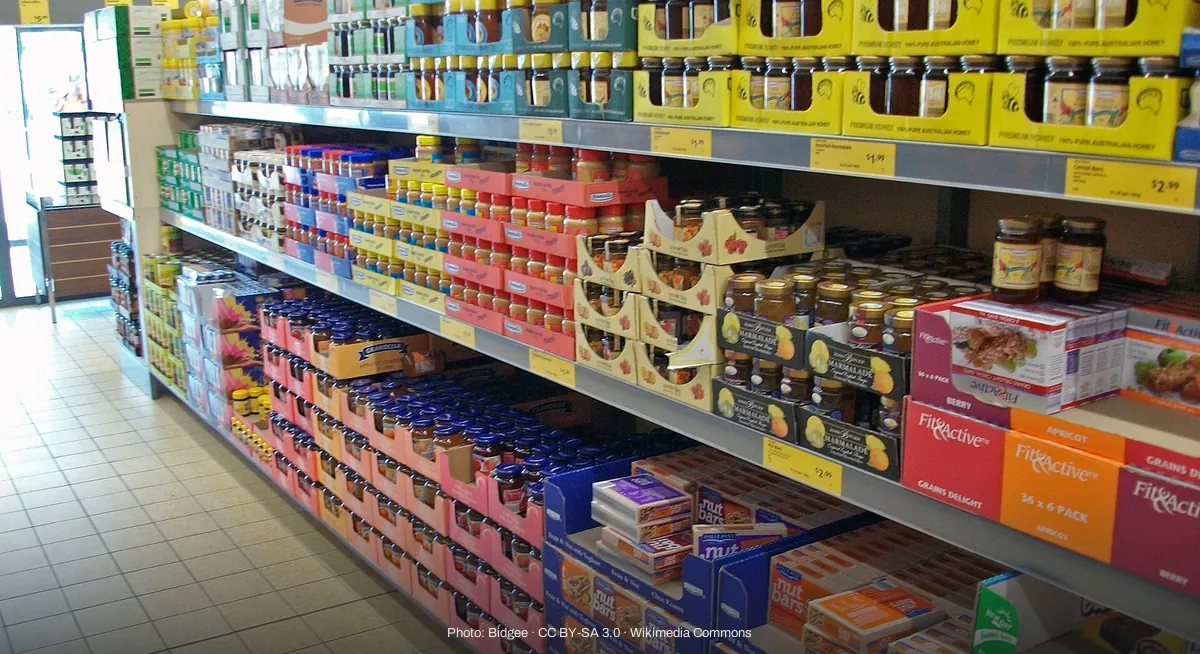
Compare Grocery Prices Across Woolworths, Coles and ALDI Australia
Pull the same aisle from Woolworths, Coles and ALDI Australia, put every product on a price per kg or per litre, and join Woolworths and Coles on the barcode.
The actor referenced in this article. Pay only for results delivered.
Comparing grocery prices across Woolworths, Coles and ALDI by hand is slow, and it is easy to get wrong. Each chain prints unit prices its own way, so a pack priced per 100 g sits next to one priced per kg. Woolworths and Coles change their specials every Wednesday. ALDI rarely shows a was price at all and marks cheaper products with promotion groups instead. Coles and ALDI also price some lines differently by store or state, so a national number can hide the gap you are looking for.
Try it live: Coles Scraper. Pay per result delivered.
This guide pulls the same aisle from all three chains with three actors, the Coles Scraper, the Woolworths Scraper and the ALDI Australia Scraper, puts every row on one price per kg or per litre, and joins Woolworths and Coles on the barcode where both carry it.
Which actor does what
| Woolworths Scraper | Coles Scraper | ALDI Australia Scraper | |
|---|---|---|---|
| Input | Keywords, categories, specials lists, product links or stock codes, full catalogue | Keywords, categories, specials lists, product links or ids, full catalogue | Keywords, categories, full catalogue, Special Buys, product links or SKUs |
| Whose prices | National online price, plus the in store price shown beside it | Default online store, or up to 50 stores or postcodes | Default online prices, or up to 10 states, postcodes or stores |
| Unit price on one scale | unit_price_normalized per kg, litre or each | unit_price_normalized per kg, litre or each | unit_price with unit_price_unit, for example 2.38 per 100 g |
| Barcode | Every row | Product links, or list rows with includeDetails | No barcode field |
| Specials | All, half price, multi buy, lower shelf price, seasonal, online only, everyday low price | All, half price, multi buy, online only | Special Buys by date and theme; Lower Prices, Super Savers and Limited Time Only flags |
| Full catalogue in our test | 24,864 products | 24,926 products for one store | 3,322 products |
The main differences come from the chains, not the actors. Woolworths keeps store prices behind an address session, so its rows are national. Coles prices, was prices and stock differ by store: in a test the same Tim Tam Original 200g was $4.50 at Coles Karratha and at Coles Collingwood, but its was price was $6.42 against $6.00, with 279 packs against 557 in stock. ALDI prices most packaged groceries the same everywhere and fresh produce, meat and liquor by store: in a full range test a Perth store differed from ALDI’s default prices on 66 products and a Melbourne store on 28.
The inputs
All three examples read the milk aisle for Sydney. Coles, cheapest per litre first, for the Coles nearest postcode 2000 that sells online, with barcodes on:
{
  "categories": ["Milk"],
  "postcodes": ["2000"],
  "sortBy": "unitPriceAscending",
  "includeDetails": true,
  "maxItems": 500
}
includeDetails adds the barcode, ingredients and nutrition to list rows with one extra call per 24 products, at no extra charge. Without it, Coles list rows still carry price, unit price, stock quantity and category path.
Woolworths, the same aisle sorted by unit price:
{
  "categories": ["Milk"],
  "sortBy": "unit_price_asc",
  "maxItems": 500
}
ALDI, priced for the store nearest the same postcode:
{
  "categories": ["Milk"],
  "regions": ["2000"],
  "sortBy": "price_asc",
  "maxItems": 500
}
ALDI has no unit price sort, so the script below does that part. Each of the three also takes keywords in searchQueries, product links or codes in productUrls, and a whole catalogue with fullCatalogue.
Run the three from Python
pip install apify-clientimport csv
from apify_client import ApifyClient
client = ApifyClient("YOUR_APIFY_TOKEN")
inputs = {
"woolworths-scraper": {"categories": ["Milk"], "sortBy": "unit_price_asc", "maxItems": 500},
"coles-scraper": {"categories": ["Milk"], "postcodes": ["2000"], "sortBy": "unitPriceAscending",
"includeDetails": True, "maxItems": 500},
"aldi-australia-scraper": {"categories": ["Milk"], "regions": ["2000"], "sortBy": "price_asc", "maxItems": 500},
}
def aldi_unit(item):
# ALDI prints the unit price per its own unit, such as 2.38 per "100 g" or 5.32 per "1 kg".
price, parts = item.get("unit_price"), item.get("unit_price_unit", "").split()
if price is None or len(parts) != 2:
return None, None
qty, unit = float(parts[0]), parts[1].lower()
factor = {"g": (1000, "kg"), "kg": (1, "kg"), "ml": (1000, "l"), "l": (1, "l")}.get(unit)
if not factor:
return None, None # per each and other units are left out of the ranking
return round(price / qty * factor[0], 2), factor[1]
rows = []
for slug, run_input in inputs.items():
run = client.actor(f"themineworks/{slug}").call(run_input=run_input)
for item in client.dataset(run["defaultDatasetId"]).iterate_items():
if "_type" in item or item.get("price") is None:
continue # summary, info and error rows, and products with no price today
if slug == "aldi-australia-scraper":
per_unit, unit = aldi_unit(item)
rows.append({"chain": "ALDI", "id": item["sku"], "barcode": None, "name": item["name"],
"price": item["price"], "per_unit": per_unit, "unit": unit,
"deal": item.get("on_promotion"), "store": item.get("store_name")})
else:
rows.append({"chain": item["retailer"], "id": item["product_id"], "barcode": item.get("barcode"),
"name": item["display_name"], "price": item["price"],
"per_unit": item.get("unit_price_normalized"),
"unit": (item.get("unit_price_normalized_unit") or "").lower(),
"deal": item.get("on_special"), "store": item.get("store_name", "online")})
with open("milk_prices.csv", "w", newline="", encoding="utf-8") as f:
writer = csv.DictWriter(f, fieldnames=list(rows[0].keys()))
writer.writeheader()
writer.writerows(rows)
print("Cheapest per litre across all three chains:")
for r in sorted((r for r in rows if r["unit"] == "l" and r["per_unit"]), key=lambda r: r["per_unit"])[:10]:
print(f'{r["chain"]:<10} ${r["per_unit"]:.2f}/L {r["name"]}')
wool = {r["barcode"]: r for r in rows if r["chain"] == "Woolworths" and r["barcode"]}
print("\nSame barcode at Woolworths and Coles:")
for r in rows:
if r["chain"] == "Coles" and r["barcode"] in wool:
w = wool[r["barcode"]]
print(f'{r["name"]}: Coles ${r["price"]} vs Woolworths ${w["price"]}')The script writes one CSV for the aisle, prints the ten cheapest products per litre across all three chains, and lists every product both Woolworths and Coles sell under the same barcode with the two prices side by side. Products with no price are dropped first: Woolworths and Coles still list some lines they do not sell online right now, with in_stock false and no price (162 of 6,827 Woolworths rows and 31 of 6,725 Coles rows in their tests).
What the rows hold
- Woolworths:
product_id,barcode,display_name,size,price,was_price,on_special,is_half_price,multibuy_quantityandmultibuy_total_price,unit_price_displayas printed andunit_price_normalized,instore_price,in_stock,purchase_limit,category_path, and food facts on every row:ingredients,allergens_contains,health_star_ratingandnutrition. - Coles:
product_id,display_name,size,price,was_price,on_special,special_type,offer_description(for example Pick any 2 for $5),unit_price_displayandunit_price_normalized,stock_quantityon list rows,purchase_limit,category_path, andstore_id,store_nameandstore_statefor the store the price belongs to. - ALDI:
sku,name,brand,pack_size,price,unit_priceandunit_price_unit,category_path, the flagslower_price,super_saverandlimited_time_only,special_buywithon_sale_dateandspecial_buy_theme,availability, and the store fields when you give regions.
Each dataset also has summary, info and error rows with a _type field, which are never charged.
What it costs
| Actor | Free plan per 1,000 | Gold and above per 1,000 | Start fee per run |
|---|---|---|---|
| Woolworths Scraper | $0.54 | $0.27 | $0.003 |
| Coles Scraper | $0.90 | $0.63 | $0.003 |
| ALDI Australia Scraper | $2.70 | $1.62 | $0.001 |
All three charge the start fee only after the first product row is stored, so a run that delivers nothing costs nothing. Barcode, nutrition, store prices, promotion flags and monitor mode add nothing. A product read for two stores is two rows.
For scale, using the catalogue sizes from the tests: the full Woolworths catalogue of 24,864 products is about $13.43 on the Free plan and $6.71 on Gold. The Coles catalogue for one store, 24,926 products, is about $22.43 and $15.70. The ALDI catalogue of 3,322 products is about $8.97 and $5.38. A milk aisle of a few hundred products costs cents.
For a weekly or daily watch, turn on monitorMode with a monitorName in any of the three. Each run then returns only new products and the ones whose price or was price moved, with previous_price, price_change and price_change_percent, and unchanged products are not charged. Set includeNewProducts to false and the first run saves the baseline without charging per product.
Limits worth knowing
- Woolworths has no store prices. Rows carry the online price and the in store price Woolworths shows beside it, not a price for one suburb.
- Coles serves 5,000 products per list. The actor splits big categories and the full specials list into parts, but a keyword search is not split, so narrow a keyword with more than 5,000 results. Coles sometimes answers datacenter IPs with a bot check page; with
residentialRetryon, a page refused twice gets a last try on an Australian residential IP. - ALDI has no barcode and rarely a was price. Its rows cannot be joined to the other two on the barcode, and
was_priceis usually empty because ALDI uses its Lower Prices, Super Savers and Limited Time Only groups instead. In a full catalogue run the unit price was filled on 81% of rows; ALDI publishes none for liquor and most Special Buys. - Unit prices are as good as the source. Some products, such as gift cards, have no unit price at Coles, and the script leaves per each items out of the per litre ranking.
- robots.txt. Each of the three sites asks crawlers to stay away from its search pages. The actors do not load those pages; they call the data the sites load for them. The actors’ own pages say to decide for yourself whether that suits your use; web scraping legal guide covers the general picture.
Put it on a schedule
Save each input as a task in Apify Console, open Schedules, and add a schedule for Wednesday morning when the Woolworths and Coles specials change, or daily with monitor mode on. Apify’s Google Sheets integration sends each run’s rows to a sheet, and webhooks or the Apify apps in Make, Zapier and n8n send price drops to Slack or email. For the trade between paying per row and a subscription, see pay per result vs subscription scraping.
Related
Explore the scraper referenced in this article: inputs, outputs, and pricing, then run it on Apify.
Frequently asked questions
Can I compare the same product at Woolworths and Coles? +
Yes, on the barcode. Woolworths rows carry it on every product; it was on 6,827 of 6,827 rows in a test. Coles rows carry it on product links, or on list rows when includeDetails is on. ALDI rows have an 18 digit ALDI SKU and no barcode field, so compare ALDI by aisle and unit price.
Are the prices for my local store? +
Coles takes up to 50 store ids or postcodes per run and ALDI up to 10 states, postcodes or store ids. Woolworths returns its national online prices plus the in store price it shows beside them; its store prices sit behind an address session that the actor does not open.
When should a weekly specials run happen? +
Woolworths and Coles both change their specials on Wednesday, so schedule specials runs for Wednesday morning. ALDI publishes Special Buys by on sale date, and turning on specialBuys reads every date and theme it currently advertises, with on_sale_date and on_sale_label on each row.
How do I keep a daily run cheap? +
Turn on monitorMode with a monitorName. Each run then returns only new products and those whose price moved, with previous_price and price_change, and unchanged products are not charged. Set includeNewProducts to false and the first run only saves a baseline, so it costs nothing per product.
Find a Chinese Supplier From a Product Photo: 1688, JD and Goofish
Turn one product photo into a 1688 factory shortlist with MOQ and price tiers, then check the Chinese retail price on JD and the second-hand price on Goofish.
Food Delivery Restaurant Data: Menus, Prices, Fees and Lead Lists From Uber Eats, Glovo and iFood
Pull restaurants, full menus with prices, delivery fees, ratings and business contact fields from Uber Eats, Glovo and iFood for any address, one row per restaurant.
Pull the Top 100 Best Sellers for Every Amazon Subcategory in One Run
Walk an Amazon department with Amazon Bestsellers Scraper and get the top 100 of every subcategory in one run, with a hard cap on lists and cost.
Compare an App's App Store Reviews Across Countries
Read one app's App Store reviews in many countries in one run with App Store Reviews Scraper, then compare ratings and top complaints country by country.